PDC 2026 Workshop Descriptions
Wednesday's Plenary
Opening Keynote
From Access to Action: Impact-Driven Student Affairs
Dr. Pilar Huffman, Executive Director @ Motivated to Achieve
This keynote challenges student affairs professionals to rethink access, innovation, and inclusion as daily leadership practices; not abstract values. Through a human-centered lens, participants will explore how systems, roles, and decisions shape student experiences and learn how to move from good intentions to measurable, meaningful impact that students can truly feel.
- Redefine access as a lived student experience shaped by people, processes, and campus culture
- Apply human-centered innovation to improve student services and remove barriers
- Recognize shared responsibility for inclusion across all student affairs roles
- Translate intention into impact through actionable leadership practices that advance student success

Dr. Pilar Huffman is a visionary leader with over 20 years of experience in learning and organizational development across higher education and corporate environments. She currently serves as the Director of Professional Development at Compton College, where she designs and leads innovative, equity-centered professional development for faculty, classified professionals, managers, and students. Dr. Huffman holds a Doctorate in Education in Organizational Change and Administration, along with graduate degrees in Industrial/Organizational Psychology and Organizational Leadership. Her work centers on human-centered leadership, culturally responsive practice, employee engagement, and sustainable systems that support student success.
A passionate advocate for access, belonging, and professional growth, Dr. Huffman serves on multiple statewide and national boards, including roles focused on mentorship, student basic needs, and institutional effectiveness within the California Community Colleges system. As a first-generation college graduate, she is deeply committed to empowering others to lead with purpose, authenticity, and care.
Opening Presentation
Access Is Not Accommodation: Learning Differences, Power, and the Promise of California Community Colleges
Dr. Karen D. Harris (Tyrrell), M.A., ED.D., Executive Director/Chief Learning Officer @ Let’s Talk Learning Differences
California Community Colleges were built on a promise of open access—but access has too often been reduced to compliance, documentation, and individualized accommodation rather than understood as a system-level design responsibility. This Opening Presentation reframes learning differences not as student deficits to be managed, but as predictable outcomes of institutional structures that privilege narrow norms of cognition, communication, and time. Grounded in the policy and practice landscape of the California Community Colleges, this address examines how equity initiatives, Guided Pathways, probation and SAP processes, and DSPS structures can unintentionally reproduce exclusion—particularly for neurodivergent, disabled, adult re-entry, racially marginalized, and first-generation students.
The Opening Presentation honors the invisible labor of student affairs professionals who routinely mitigate these harms while lacking authority to redesign the systems that create them. Rather than offering abstract inspiration, this Opening Presentation provides a critical yet practical reframing of access as relational, temporal, and structural work—and positions student affairs professionals as architects of institutional readiness.
Participants will leave with renewed clarity about their role in advancing neuroaffirming, equity-centered systems change within California’s open-access colleges. Key themes will include:
- Access vs. accommodation
- Learning differences as a systems issue
- Time, documentation, and disclosure as equity levers
- Student affairs as institutional infrastructure
By the conclusion of this keynote, participants will be able to:
- Distinguish between accommodation-based access and systems-level access design, and explain why this distinction is essential for advancing equity within the California Community Colleges.
- Analyze how institutional structures—including time-based policies, documentation requirements, and disclosure expectations—shape outcomes for neurodivergent and disabled students, often independent of individual ability or effort.
- Identify at least two student affairs policies or practices (e.g., DSPS intake, probation/SAP, Guided Pathways defaults, early alert systems) that may unintentionally reproduce barriers to access.
- Reframe student affairs work as institutional infrastructure, recognizing the role of student-facing professionals as key actors in designing neuroaffirming, equity-centered systems rather than solely providing individual support.

Dr. Karen D. "KD" Harris Tyrrell (she/her) is a practitioner-scholar-activist whose life’s work is rooted in advancing social and educational justice for historically marginalized learners. Across every space she leads, her mission is clear: to build systems, communities, and pathways where all people — especially those at the intersections of neurodivergence, culture, language, and identity — are seen, valued, and empowered to thrive. Over a 16-year tenure as a higher education administrator at the University of Southern California, Dr. Harris Tyrrell championed equity-minded innovation that expanded opportunity and belonging for diverse student populations. She has also led transformative talent, organizational learning, and change management initiatives within two global corporations spanning media, information services, and entertainment sectors — bringing a systems-change lens to leadership across industries.
As Co-Founder and Executive Director of Let’s Talk Learning Differences (LD), she advances advocacy, education, and professional learning to improve life outcomes for neurodivergent people across the lifespan. She is also the Founder and Chief Engagement Officer of Neurodiverse*City — a liberatory third space created by and for neurodivergent people to connect, heal, build community cultural wealth, and lead collective systems change. A neuroaffirming qualitative researcher, Dr. Harris Tyrrell centers storytelling as a powerful tool for honoring lived experience and catalyzing transformation across education, employment, and civic life.
She holds dual B.A. degrees from the University of Southern California, an M.A. from Touro University Worldwide, and an Ed.D. in Educational Leadership from California State Polytechnic University, Pomona.
Thursday's Workshop Topics
Workshop Session #1:
More Than Spirit Weeks: Bringing the Power (and the Purpose) Back to Student Government
Dr. Julie Adams, Executive Director @ Student Senate For California Community Colleges
Sage Beamon, Engagement and Development @ Student Senate For California Community Colleges
Student Body Associations absolutely plan the club rush, spirit weeks, and campus traditions students love, but should they? SBAs are designed to be powerful participatory governance bodies that shape policy, equity efforts, and institutional decision-making. This session explores how advisors can leverage fun to strengthen their student government's governance arm. Participants will leave with practical strategies to help their SBA thrive as both campus culture-builders and influential leaders at the decision-making table.
- Reframe the role of Student Body Associations as both campus programmers and participatory governance leaders.
- Identify structural and cultural shifts that can help SBAs balance engagement, advocacy, and institutional impact.
- Implement actionable advising strategies that strengthen student voice while maintaining the SBA's emphasis on its true purpose.
Dr. Julie Adams (she/her/hers) has over 30 years of experience in nonprofit management. Before joining the Student Senate, Julie provided organizational oversight of the Academic Senate for California Community Colleges for more than 20 years, served as the transition manager for Umoja Community Foundation, and started her own business, Agile Association Management Solutions.
After serving in the US Army, she attended more than six California community colleges, received her Bachelor's Degree in Business from California State University - Sacramento, an MBA from the University of California – Davis, and a Ph.D. in Public Policy and Administration, with a concentration in nonprofit management and leadership, from Walden University. She is a Certified Association Executive (CAE) and a member of the American Society of Association Executives (ASAE) and the California Chapter of ASAE (CalSAE). She also holds a Nonprofit Board Consulting Certificate from BoardSource.
Originally from Milwaukee, WI, Sage Beamon has been a proud resident of Sacramento, CA, since 2013. She is #MadeAtSacState, having earned both a Bachelor of Arts and a Master of Arts in Communication Studies from California State University, Sacramento. During her graduate studies, Sage developed a deep passion for Communication Studies, focusing on Interpersonal Communication, Media Studies, and Qualitative Research Methods.
Sage's professional experience spans both higher education and private industry. Most recently, before joining the Student Senate for California Community Colleges, she was on the brand marketing team at Red Bull North America, where she specialized in collegiate marketing initiatives. Sage continues to advance her expertise in Communication Studies as a member of the Western States Communication Association. Additionally, she serves on the board of directors for the Stonewall Foundation of Greater Sacramento. Outside of her professional and volunteer commitments, Sage enjoys playing pickleball, listening to a wide range of music, and exploring local events and festivals.
Follow-up to Keynote Speaker
From Access to Action: Impact-Driven Student Affairs
Dr. Pilar Huffman, Executive Director @ Motivated to Achieve
This keynote challenges student affairs professionals to rethink access, innovation, and inclusion as daily leadership practices; not abstract values. Through a human-centered lens, participants will explore how systems, roles, and decisions shape student experiences and learn how to move from good intentions to measurable, meaningful impact that students can truly feel.
- Redefine access as a lived student experience shaped by people, processes, and campus culture
- Apply human-centered innovation to improve student services and remove barriers
- Recognize shared responsibility for inclusion across all student affairs roles
- Translate intention into impact through actionable leadership practices that advance student success
Dr. Pilar Huffman is a visionary leader with over 20 years of experience in learning and organizational development across higher education and corporate environments. She currently serves as the Director of Professional Development at Compton College, where she designs and leads innovative, equity-centered professional development for faculty, classified professionals, managers, and students. Dr. Huffman holds a Doctorate in Education in Organizational Change and Administration, along with graduate degrees in Industrial/Organizational Psychology and Organizational Leadership. Her work centers on human-centered leadership, culturally responsive practice, employee engagement, and sustainable systems that support student success.
A passionate advocate for access, belonging, and professional growth, Dr. Huffman serves on multiple statewide and national boards, including roles focused on mentorship, student basic needs, and institutional effectiveness within the California Community Colleges system. As a first-generation college graduate, she is deeply committed to empowering others to lead with purpose, authenticity, and care.
Access by Design: Building Inclusive Pathways to Legal Careers
Gladys Puente Valentine, Program Manager @ California LAW Pathways/Foundation for CA Community Colleges
Kristen Robinson, Professor, Chair, Curriculum & Instruction Council Co-Chair, Legal Studies Department @ Santa Ana College
Justin Cruz, Associate Dean of Admission @ Chapman University, Fowler School of Law
California Leadership, Access, Workforce (Cal LAW) Pathways is a statewide community college–to–law school career pathway designed to expand equitable access to legal education for nontraditional students. Through student-centered programming and intentional intersegmental collaboration, Cal LAW addresses persistent gaps in pre-law advising, mentorship, and career exposure. Featuring pathway program leads, student alums, and law school leadership, this session highlights practical strategies for building structured, scalable pathways to law school and a range of legal and advocacy careers. Participants will leave with equity-centered strategies to strengthen access, support, and student success for students pursuing legal careers.
- Identify equity-centered strategies that expand access to legal education by addressing gaps in advising, mentorship, and early career exposure for nontraditional and first-generation community college students.
- Apply leadership models that center student voice and cross-role collaboration, engaging counselors, faculty, and administrators as co-creators of pathway design and student support across educational transitions.
- Design student services practices that foster belonging, using culturally responsive advising and intersegmental partnerships to create affirming, inclusive pathways into legal education and related careers

Gladys Puente Valentine is the Program Manager for the California LAW Pathways, where she leads statewide efforts to strengthen the legal education pathway from community college through law school. She partners with community colleges, universities, and law schools to expand access, improve student support systems, and advance equity in the legal profession. With a commitment to uplifting underrepresented students, she drives strategic initiatives that foster belonging, academic success, and connection across every stage of the pathway.
Kristen Robinson is a department chair and faculty member at Santa Ana College in the Legal Studies Department. She teaches Law and Paralegal classes, and in 2022, she was recognized as the college’s distinguished faculty member. Before teaching, she worked in complex corporate civil litigation in Washington, DC and Los Angeles, CA. At Santa Ana College, she developed the school’s Pathway to Law School certificate program and currently serves as program director. She is dedicated to providing her students with quality legal education to help them enter the workforce as interpreters, paralegals, and even future lawyers. One of Kristen’s favorite things to do in class is to offer her lecture entitled: “Zombies in the Law: The Legal Implications of the Undead.” She is certain that if zombies were real, they would want to take her class and become lawyers.
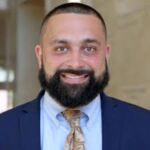
Justin Cruz is the Associate Dean of Admission at Chapman University Dale E. Fowler School of Law. He earned a BS in Industrial and Systems Engineering with Honors from the Georgia Institute of Technology and a JD from Washington University School of Law in St. Louis. During law school, Dean Cruz served as Managing Editor of the Washington University Law Review. He received the CALI Excellence Award for his work in the Intellectual Property and Nonprofit Organization Clinic. After graduation, Dean Cruz practiced intellectual property law as in-house counsel for a Fortune 500 company before transitioning into legal education administration. He served as Associate Dean of Student Affairs at Barry University School of Law and as Assistant Director of Admission at Thomas Jefferson School of Law (TJSL) in San Diego, where he also taught as an adjunct professor in the Intellectual Property Law Practicum. Before his legal career, Dean Cruz worked as an engineer for Caterpillar, Inc. Dean Cruz has held numerous leadership roles with LSAC, including serving on the Board of Trustees, the Investment Committee, and the Governance and Trusteeship Committee. He has been recognized for his leadership and commitment to diversity and inclusion through awards from the Orange County Bar Association and CLEO. He continues to advance equity in legal education through leadership with the Annual Meeting of Law School Diversity Professionals and as a board member of the Constitutional Rights Foundation of Orange County.
Access Track
Creating a Culture of Equity Through Accessibility
Dawn Okinaka, Accessibility Director @ California Community Colleges Accessibility Center
Christine Fundell, Program Manager - Section 508 @ California Community Colleges Accessibility Center
Join the CCC Accessibility Center for this interactive, participatory session to learn about the Accessibility Capability Maturity Model (ACMM) and the importance of providing equitable access for all students, faculty, and staff.
- A Capability Maturity Model framework drives accessibility forward.
- Accommodations do not equal equity. Implementing an ACMM can reduce the cost of providing accommodations.
- Accessibility in relation to Diversity, Equity, and Inclusion
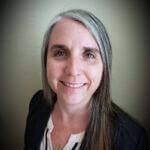
Dawn Okinaka is the Director of the California Community Colleges Accessibility Center. She has 22 years in higher education, with the last 17 in accessibility compliance. As a subject-matter expert, she has worked with government agencies, technology vendors, and various higher education institutions. Her extensive work in higher education accessibility initiatives includes developing processes, procedures, and best practices related to accessible procurement, web, and instructional materials. Dawn has led the California Community Colleges Accessibility Center for five years, supporting both reactive and proactive accessibility. Dawn feels that institutional accessibility is achieved through iterative improvement towards best practices. Dawn holds an M.A. in Education Technology and a B.A. in Ethnic Studies, both from California State University, Sacramento. She is a certified USDHS Trusted Tester for website testing. She is a member of the International Association of Accessibility Professionals (IAAP), Access Technology in Higher Education (ATHEN), and the Association on Higher Education and Disability (AHEAD).
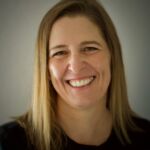
As the Section 508 Program Manager for the California Community Colleges Accessibility Center (CCCAC), Christine Fundell brings 20 years of expertise in digital inclusion in higher education. She leads the CCCAC’s 508 team in driving proactive accessibility efforts across the system. Christine holds a Master’s in Public Administration and maintains professional credentials from the International Association of Accessibility Professionals (IAAP) and the Department of Homeland Security.
Workshop Session #2:
Access Granted: Building Scalable, Tech-Enabled Wraparound Basic Needs Systems Across Student Affairs
Valerie Adger, Basic Needs Coordinator @American River College
Andre Coleman, Dean of Campus Intervention @Sacramento City College
As California Community Colleges expand their commitment to Basic Needs, student affairs leaders face a shared challenge: how to design wraparound services that are equitable, innovative, and scalable—without overwhelming limited staff and resources.
This session highlights Beaver Cares, a comprehensive Basic Needs model that integrates proactive campus partnerships, targeted financial and legal education, and technology-enabled case management to support students with complex and intersecting needs. Participants will explore how programs such as a Nutritional Education Series, Money Matters financial workshops, Tax Preparation services, and Tenant’s Rights education can be strategically embedded within a broader ecosystem of support. Through real-world examples, cross-department collaboration strategies, and practical technology tools (including Canvas and Cognito), this session will offer a replicable framework for building sustainable, high-impact Basic Needs systems that expand access, promote equity, and strengthen student success. Participants will leave with concrete strategies to enhance collaboration, streamline service delivery, and leverage technology to manage large caseloads—while centering inclusion and student empowerment.
- Design wraparound Basic Needs services that integrate financial, legal, and nutritional education within student support systems.
- Build cross-campus partnerships with departments such as Disability Services, Foster Youth programs, EOPS, and counseling to reduce silos and expand access.
- Leverage technology (e.g., Canvas, Cognito, and digital workflows) to manage complex caseloads and improve service coordination.
- Apply a scalable framework that can be adapted across institutions to advance equity, inclusion, and student success.
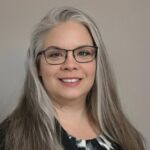
Valerie Adger has over a decade of experience in higher education, with a professional background rooted in student services and Basic Needs support. For nearly as long as she has worked in higher education, her focus has been on advancing equitable access to resources that support students’ academic success and overall well-being. Her work centers on addressing housing insecurity, food insecurity, financial wellness, and wraparound support services for students. In addition to her higher education experience, Valerie brings a multidisciplinary background, including work in real estate, insurance, and the nonprofit sector. This cross-sector experience informs her practical, systems-oriented approach to Basic Needs programming, financial education, and student advocacy.
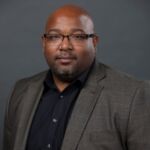
Dr. Andre Coleman serves as the Dean of Campus Intervention at Sacramento City College and brings over 25 years of experience in higher education. His professional background includes leadership and expertise in Basic Needs initiatives, behavioral intervention teams, and Title IX compliance and response. Throughout his career, Dr. Coleman has focused on developing coordinated, student-centered intervention systems that promote campus safety, equity, and student success.
What Equity Really Means: A Practical Guide for Putting Equity Into Everyday Practice
Angelica Ibarra, Guided Pathways Regional Coordinator @ Foundation for California Community Colleges
Equity is everywhere, but often misunderstood. This session breaks it down with clarity, humility, and a practical tool you can take back to your campus. Using real examples, we’ll explore how to spot hidden barriers, slow down for reflection, and build student-centered practices that stick. You’ll leave with the Equity Lens Tool—a simple but powerful guide to help you and your team shift from good intentions to daily equity-in-action.
- Define what equity means in practical, actionable terms—beyond definitions or buzzwords.
- Identify institutional or everyday “red lights” (barriers) that impact student access, belonging, and success.
- Apply the Equity Lens Tool to reflect on and reimagine student-facing practices through a student-centered, data-informed lens.
- Leave with a ready-to-use tool they can immediately implement to guide equity conversations, decision-making, and process improvement on their campus.

Angelica Ibarra currently serves as a Guided Pathways Regional Coordinator for the Inland Empire/Desert region on behalf of the Foundation for California Community Colleges. Over her 20-year career in higher education, Angelica has had comprehensive leadership experience on student engagement & retention initiatives, including campus-wide reforms. Angelica has developed and led multifaceted social justice education programs in all areas of intercultural competence, leadership, and student development. As an ENFJ (Extrovert, Intuitive, Feeling, Judging), Angelica takes great pride and joy in guiding others to achieve their personal potential.
Leading with Clarity: Aligning Policy, Student Rights, and Institutional Response
Dr. Nicky Damania, Dean of Students @ Bakersfield College
Doris Hankins, Director of Student Life @ Merritt College
In today’s evolving higher education landscape, student services leaders must balance governance, free expression, safety, and equity. This session offers a comprehensive overview of foundational areas shaping campus operations: Board Policies and Administrative Procedures; Time, Place, and Manner considerations; sexual misconduct versus Title IX processes; behavioral intervention strategies; and the distinction between informal complaints and formal grievances. Grounded in practical application, this workshop supports attendees in building shared understanding across teams, reducing ambiguity, and strengthening institutional alignment. Together, we will explore how clear policy navigation advances our collective purpose of leading and learning with integrity.
- Distinguish between Board Policies and Administrative Procedures and explain how each guides decision‑making, institutional authority, and compliance expectations within student services.
- Identify the legal and operational differences among Time, Place, and Manner regulations, sexual misconduct processes, and Title IX requirements, ensuring appropriate and compliant campus responses to diverse situations.
- Differentiate informal complaints from formal grievance procedures and apply proper documentation, referral, and risk‑mitigation practices that support fair and consistent resolution pathways.
- Interpret core categories of student misconduct—including disruption, dishonesty, harassment, safety‑related violations, and free‑expression boundaries. Determine appropriate responses by applying due‑process requirements, escalating safety‑critical behavior, and selecting sanctions ranging from educational interventions to suspension or expulsion.
- Strengthen cross‑department collaboration by understanding the respective authority of faculty, CSSO, the President, and the Board in discipline and behavioral intervention processes, supporting coordinated, student‑centered decision‑making.
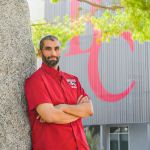
Dr. Nicky Damania began his career at Bakersfield College in August 2014. He hails from the rocky mountain state, Colorado. He attended Colorado College where he doubled majored in biology (emphasis in pre-med and electron microscopy) and drama (emphasis in technical theatre and directing). He earned his Master's Degree in Career and Technology Education, Training and Development of College Students, at Bowling Green State University in Ohio and completed his doctoral degree in Educational Leadership, Research, and Policy at University of Colorado at Colorado Springs. His focus areas are on developing student leadership and creating effective and efficient student organizations. Other than long hikes in the mountains, he enjoys college life and everything that life has to offer him. He lives his life by a motto that was shared with him in high school, "Once the flame of one's desires touches your heart, it will never go away. So let your heart be your guide."

Doris Hankins is an educational administrator and community leader with 25+ years in higher education. As Director, she leads programs supporting basic needs, LGBTQIA+ students, civic engagement, and student leadership. Known for advancing equity and addressing food and housing insecurity, she builds strong community partnerships. A Merritt alumna, she holds multiple degrees and is a doctoral candidate at USF. Doris is an award-winning leader active in statewide and national organizations, committed to compassionate, equity-driven leadership, holistic well-being, and the empowerment of future educational leaders. Outside of work, Doris is active in her church, an entrepreneur, and enjoys traveling, baking, and spending time with her family. She is a strong advocate for self-care and mental health, and her vision is to continue breaking down barriers and empowering the next generation of educational leaders.
Access Track
Inclusive by Design: Creating Accessible Events and Communications
Christine Fundell, Program Manager - Section 508 @ California Community Colleges Accessibility Center
Elisa Carrillo, Digital Content Specialist @ California Community Colleges Accessibility Center
Learn how to integrate accessibility into every stage of both in-person and virtual event planning. This session will explore the significance of disability inclusion in event organization, provide best practices to ensure equitable participation for all attendees, and offer guidance on creating accessible presentation and marketing materials to promote your event effectively.
- Explain why disability inclusion matters for event success and attendee experience.
- Apply best practices to ensure equitable access for both in-person and virtual attendees.
- Create accessible materials for marketing, promotions, and on-screen presentations.
- Use a step-by-step approach to integrate accessibility into every stage of event planning.
As the Section 508 Program Manager for the California Community Colleges Accessibility Center (CCCAC), Christine Fundell brings 20 years of expertise in digital inclusion in higher education. She leads the CCCAC’s 508 team in driving proactive accessibility efforts across the system. Christine holds a Master’s in Public Administration and maintains professional credentials from the International Association of Accessibility Professionals (IAAP) and the Department of Homeland Security.
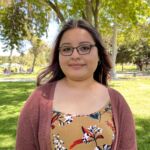
Elisa Carrillo is the Digital Content Accessibility Specialist at the California Community Colleges Accessibility Center, part of the Technology Center. As the Digital Content Accessibility Specialist, Elisa provides accessibility resources and guidance for digital content, including email, social media, and documents, to ensure equitable online access within California Community Colleges. Elisa is pursuing a master's degree in Assistive Technology and Human Services at CSU Northridge and hopes to continue advancing digital equity and inclusion.
Workshop Session #3:
Holistic Support for Undocumented and LGBTQIA+ Students in Basic Needs Spaces
Marisela Hernandez, Equity Manager @ Foundation for California Community Colleges
This presentation explores how colleges can reimagine basic needs support for undocumented and LGBTQIA+ students through equity-centered practices and cross-campus collaboration. Highlighting promising practices, participants will learn replicable strategies, partnership models, and culturally responsive approaches to strengthen the cooperation and outreach, advancing inclusive support systems. Presenters will highlight a college and several promising practices as examples of a partnership that has transformed how campuses respond to housing, food access, mental health, transportation, and identity-affirming services, while fostering a sense of belonging and safety across campus.
Building on this collaborative foundation, the presentation will also examine the role of peer-to-peer student ambassadors in advancing basic needs work. The CCC Student Ambassador Program equips students with leadership development, coaching, and culturally responsive outreach skills to help peers navigate essential resources with dignity. Attendees will leave with practical strategies to reimagine basic needs work through cross-campus partnerships and the power of peer leadership.
- Participants will examine how undocumented and LGBTQ+ students experience unique barriers when accessing basic needs resources and explore replicable strategies that create affirming environments.
- Participants will identify opportunities to leverage cross-campus partnerships, including Basic Needs Liaisons, UndocuLiaisons, and LGBTQ+ Liaisons, to transform services and close equity gaps.
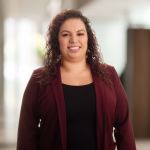
Marisela Hernandez is a dedicated higher education leader passionate about advancing equity and student success. She currently serves as the Equity Program Manager at the Foundation for California Community Colleges, where she leads initiatives that strengthen access, belonging, and holistic student support across the state. With over thirteen years of experience, Marisela has centered much of her work on advocating for undocumented students. She has led collaborations with the California Community Colleges Chancellor’s Office, the statewide UndocuLiaison Network, and subject matter experts supporting undocumented communities. She co-authored the statewide Undocumented Student Support eHandbook, a comprehensive resource that helps colleges expand their capacity to serve undocumented students. She also founded the Sacramento City College Dreamers Program and the Sierra College Undocumented Student Center, reflecting her commitment to community advocacy and student empowerment. At FoundationCCC, Marisela oversees the statewide Basic Needs Initiatives and the CCC Community Resources Student Ambassador Program. Under her leadership, the ambassador program has trained more than 600 students and generated over 1.5 million student connections across California. Through the Leadership Academy and the Student Ambassador Alumni Network, the program now emphasizes leadership development, professional growth, and long-term community impact. Marisela holds a Bachelor’s degree in Communication Studies from California State University, Chico, and a Master’s in Business Administration for Executives from California State University, Sacramento. She is deeply committed to supporting underrepresented communities, particularly undocumented and first-generation students, and to creating pathways that uplift individuals and communities for generations to come.
Follow-up to Opening Presentation
From Equity Statements to Structural Change:
Designing Neuroaffirming Student Affairs Systems
Dr. Karen D. Harris (Tyrrell), M.A., ED.D., Executive Director/Chief Learning Officer @ Let’s Talk Learning Differences
Equity plans, mission statements, and values declarations are necessary—but insufficient—when institutional systems continue to rely on assumptions that disadvantage neurodivergent, disabled, and racially marginalized students. This interactive session invites California community college student affairs professionals to move from reflection to redesign by examining how everyday systems allocate access, time, and legitimacy. Participants will engage in a guided systems-mapping process focused on common student affairs structures such as probation and SAP, DSPS intake, onboarding, early alert, or care teams. Using a neuroaffirming, equity-centered framework, groups will identify hidden assumptions about executive function, communication, and help-seeking embedded in these systems—and explore feasible redesign strategies that align with California community college realities. The session emphasizes practical change that can survive beyond the conference setting. Participants will leave with concrete commitments at the practice, policy, and collaboration levels, reframing equity not as an aspiration but as a series of intentional design choices embedded in student affairs work.
- Map a student affairs system or process (e.g., DSPS intake, probation/SAP, onboarding, early alert, care teams) and identify embedded assumptions about time, communication, executive function, and help-seeking within the California Community Colleges context.
- Apply a neuroaffirming, equity-centered lens to analyze how student affairs policies and practices may unintentionally reproduce barriers for neurodivergent, disabled, adult re-entry, and racially marginalized students.
- Differentiate between workaround labor and structural change, naming where student affairs professionals are compensating for system design limitations rather than addressing root causes.
- Develop one feasible systems-level redesign or practice shift that advances access beyond compliance and is actionable within participants’ institutional roles."

Dr. Karen D. "KD" Harris Tyrrell (she/her) is a practitioner-scholar-activist whose life’s work is rooted in advancing social and educational justice for historically marginalized learners. Across every space she leads, her mission is clear: to build systems, communities, and pathways where all people — especially those at the intersections of neurodivergence, culture, language, and identity — are seen, valued, and empowered to thrive. Over a 16-year tenure as a higher education administrator at the University of Southern California, Dr. Harris Tyrrell championed equity-minded innovation that expanded opportunity and belonging for diverse student populations. She has also led transformative talent, organizational learning, and change management initiatives within two global corporations spanning media, information services, and entertainment sectors — bringing a systems-change lens to leadership across industries.
As Co-Founder and Executive Director of Let’s Talk Learning Differences (LD), she advances advocacy, education, and professional learning to improve life outcomes for neurodivergent people across the lifespan. She is also the Founder and Chief Engagement Officer of Neurodiverse*City — a liberatory third space created by and for neurodivergent people to connect, heal, build community cultural wealth, and lead collective systems change. A neuroaffirming qualitative researcher, Dr. Harris Tyrrell centers storytelling as a powerful tool for honoring lived experience and catalyzing transformation across education, employment, and civic life.
She holds dual B.A. degrees from the University of Southern California, an M.A. from Touro University Worldwide, and an Ed.D. in Educational Leadership from California State Polytechnic University, Pomona.
Access Track
There’s no DEIA without Disability
Dawn Okinaka, Accessibility Director @ California Community Colleges Accessibility Center
Lauren Miller, Digital Content Specialist @ California Community Colleges Accessibility Center
DEI initiatives and principles are incomplete without the inclusion of disability. Leaving disability out of DEI efforts marginalizes the millions of individuals with disabilities. Recognizing the intersectionality of disability and other identities is imperative to creating an environment that is truly equitable and inclusive. This workshop will discuss DEIA principles, how they differ from DEI, and how to foster an environment that does not treat disability and accessibility as afterthoughts or inconveniences.
- Distinguish between DEI and DEIA by understanding how accessibility completes the inclusion framework.
- Explain the impact of excluding disability from diversity initiatives on marginalized groups.
- Identify intersectional identities to understand better how disability overlaps with race, gender, and other factors.
- Shift organizational culture to treat accessibility as a foundational requirement rather than an afterthought.
Dawn Okinaka is the Director of the California Community Colleges Accessibility Center. She has 22 years in higher education, with the last 17 in accessibility compliance. As a subject-matter expert, she has worked with government agencies, technology vendors, and various higher education institutions. Her extensive work in higher education accessibility initiatives includes developing processes, procedures, and best practices related to accessible procurement, web, and instructional materials. Dawn has led the California Community Colleges Accessibility Center for five years, supporting both reactive and proactive accessibility. Dawn feels that institutional accessibility is achieved through iterative improvement towards best practices.
Dawn holds an M.A. in Education Technology and a B.A. in Ethnic Studies, both from California State University, Sacramento. She is a certified USDHS Trusted Tester for website testing. She is a member of the International Association of Accessibility Professionals (IAAP), Access Technology in Higher Education (ATHEN), and the Association on Higher Education and Disability (AHEAD).
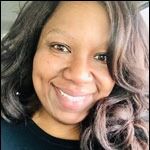
Lauren Miller is the Digital Content Specialist for the CCCAC. She previously spent eight years working in DSPS at Los Angeles Harbor College and continues to work as an adjunct instructor of Learning Skills and Learning Foundations. She has a B.A. in Behavioral Sciences from CSU Dominguez Hills and an M.Ed. in Community College/Higher Education Leadership and Educational Technology from Northern Arizona University (NAU). Being passionate about accessibility, she keeps disability in mind when discussing equity and community college education. She has a motto of “Accessibility from the Heart”, which is what she constantly strives to provide.
Workshop Session #4:
Exploring Leadership in Action: Transformational, Servant, and Transactional Approaches
Jane Linder, Statewide Program Director, Student Success Suite @ California Community Colleges Technology Center
Julia Arreguy, Chief Technology Officer @ California Community Colleges Technology Center
Join us to discover how the California Community Colleges Technology Center (CCCTC) is stopping scammers while streamlining the application process for authentic students. You will get an inside look at the systemwide tools designed to help staff spot applications submitted by "bad actors" and protect financial aid funds. We will also show you exactly how to help genuine students who might inadvertently fall into the safety net. Bring your stories and your questions for a lively Q&A session at the end!
- A high-level understanding of the CCC systemwide application fraud interventions and the tools college staff can use to support genuine applicants and streamline their college onboarding.

Jane Linder has been an expert in educational technology and connecting computer systems for over 20 years. She joined the California Community Colleges Technology Center (CCCTC) in 2016. Today, she manages the systems students use to create CCC accounts and apply to college. A significant part of her job involves fighting application fraud. As scammers try to steal financial aid and class spots, Jane works to stop these "bad actors" without making it difficult for real students to apply. As a former California Community Colleges student, Jane understands the value of the CCC’s open-access system and the education and opportunities our colleges provide.
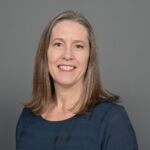
Julia Arreguy is the Chief Technology Officer for the CCC Technology Center, which provides many technologies to the CCC system. Among them are the OpenCCC student account system and CCCApply, the CCCApply fraud mitigation platform. Before joining the Tech Center in 2023, Julia spent 11 years in IT at a college in our system, focused on Student Services and Guided Pathways technologies.
Building The California Medicine Scholars Program (CMSP): Structured Pathway to Medical School
Sheyla Tupua, Associate Director @ California Medicine Scholars Program, Foundation for California Community Colleges
Jessica Garcia, Senior Program Specialist @ California Medicine Scholars Program, Foundation for California Community Colleges
The California Medicine Scholars Program (CMSP) is a transformative community college-to-medical school pathway program that focuses on diversifying the physician workforce while addressing the physician shortage. Rooted in a commitment to community and collaboration, CMSP brings together California Community Colleges, 4-year universities, medical schools, and community-based health organizations in four (4) regions of the state: Greater Northern California, Central Valley, Inland Empire, and San Diego/Imperial County to build a holistic network of support for students. With over 40 community college partners, 12 4-year universities, and 19 community-based health organizations, CMSP takes an intersegmental approach to cultivate a robust sense of belonging and community to address health equity in the state by intentionally centering cohort-based engagement, peer-to-peer mentorship, and recurring opportunities for connection among the students. Through structured monthly workshops, regional and statewide convenings, and intersegmental community-building experiences, CMSP creates spaces where students develop professional identity, build confidence, and feel affirmed in their pursuit of medicine – particularly those who are Underrepresented students in Medicine (URim). Featuring the Regional Hub for Healthcare Opportunity (RHHO) model, CMSP brings together intersegmental partners to design and deliver high-touch, equity-centered programming collectively. By the end of this session, participants will learn strategies to address the unique needs of underrepresented students pursuing medical careers.
- Understand how the California Medicine Scholars Program’s regional hub model operationalizes collaboration across California Community colleges, 4-year universities, medical schools, and community-based health organizations to strengthen educational pathways from community college to medical school.
- Identify equity-centered strategies that promote sustained community building, foster a sense of belonging, and strengthen mentorship among first-generation and underrepresented aspiring physicians.
- Learn the critical role of intersegmental collaboration within CMSP in providing students with meaningful support and experiences to ensure they can successfully advance through their educational journey.
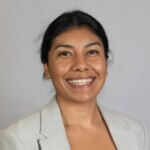
Sheyla Tupua, MPA, Associate Director: Sheyla Tupua's career spans government, higher education, and non-profit sectors, including roles with the California Governor's Office, Boys & Girls Clubs of Silicon Valley, and the City of San Jose Mayor's Office. Sheyla specializes in strategic partnerships, community engagement, and program development to expand opportunities for underserved communities. She has led multiple initiatives that have shaped access to higher education among under-resourced students in high school and supported statewide initiatives to strengthen access to community resources and education. Sheyla earned her bachelor's degree in Sociology from San Francisco State University and her master's in Public Administration from the University of San Francisco. As a first-generation graduate, she values her education and dedicates herself to supporting those on a path to higher education and/or career development. Sheyla is from Redwood City, CA (Bay Area!), and now lives in Sacramento, CA!
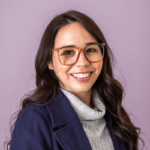
Jessica Garcia, MS, serves as the Senior Program Specialist for the California Medicine Scholars Program. She earned her Bachelor’s in Human Geography with a concentration in Urban Studies from California State University, Long Beach. Subsequently, she pursued her Master’s degree in Counseling, specializing in Student Development and Higher Education, also at CSULB. Jessica has over 9 years of experience in higher education, with a specific focus on fostering student success among diverse student populations. Before taking on her current role, she worked as the Student Services Advisor within the EOPS/CARE Program at El Camino Community College, providing essential guidance and support to economically and educationally disadvantaged students. Her responsibilities included providing motivation, support services, and access to resources to help these students achieve their educational goals at the community college. In addition to her role within the California Medicine Scholars Program, Jessica concurrently serves as an Adjunct Counselor at Barstow Community College. In this capacity, she offers counseling and support to students involved in the EOPS/CARE, NextUP, and CalWORKs programs. Her profound commitment to student success is deeply rooted in both her personal experiences and her extensive professional journey within four-year institutions and community colleges.
Access Track
Social Media and Flier Accessibility
Elisa Carrillo, Digital Content Specialist @ California Community Colleges Accessibility Center
Social media has become essential to how we communicate and interact online. Creating accessible content will help you reach a wider audience, create an inclusive environment, and reduce barriers to communication. This session will cover why accessible social media content is essential, how to create accessible content for various disabilities, and best practices for improving accessibility on platforms such as Twitter, YouTube, Facebook, and Instagram.
- Explain the importance of social media accessibility in fostering an inclusive online environment and reaching a diverse audience.
- Identify specific communication barriers that individuals with various disabilities encounter on social platforms.
- Apply best practices for creating accessible content across major platforms, including Twitter, YouTube, Facebook, and Instagram.
- Implement practical techniques for formatting text, captions, and media to ensure compliance with accessibility standards.
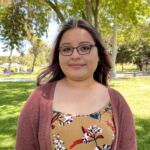
Elisa Carrillo is the Digital Content Accessibility Specialist at the California Community Colleges Accessibility Center, part of the Technology Center. As the Digital Content Accessibility Specialist, Elisa provides accessibility resources and guidance for digital content, including email, social media, and documents, to ensure equitable online access within California Community Colleges. Elisa is pursuing a master's degree in Assistive Technology and Human Services at CSU Northridge and hopes to continue advancing digital equity and inclusion.Elisa Carrillo is the Digital Content Accessibility Specialist at the California Community Colleges Accessibility Center, part of the Technology Center. As the Digital Content Accessibility Specialist, Elisa provides accessibility resources and guidance for digital content, including email, social media, and documents, to ensure equitable online access within California Community Colleges. Elisa is pursuing a master's degree in Assistive Technology and Human Services at CSU Northridge and hopes to continue advancing digital equity and inclusion.
Friday Plenary
Friday Panel Discussions with the CCCCO:
Creating the Conditions for a Student Centered Ecosystem
Mia Keeley, Dean, Educational Services and Support
Gina Browne, Assistant Vice Chancellor, Educational Services and Support
Allison Beer, Dean, Educational Services and Support (Financial Aid and Basic Needs)
Join us for an informative panel session featuring key stakeholders from the California Community Colleges (CCC) Chancellors' Office as they provide updates on critical topics impacting student success. This session will focus on key areas such as Student Success, Guided Pathways, Basic Needs, Mental Health, Health Services, Student Conduct, legislation coming down, and more, highlighting the latest initiatives and strategies being implemented to support students across the CCC system. Attendees will have the opportunity to engage with the panelists through a Q&A session, where they can ask questions and share insights on how to further enhance support for CCC students.
- Awareness of Current Initiatives: Attendees will become familiar with the current initiatives and programs implemented by the CCC.
- Insights into Best Practices: Participants will gain insights into best practices for supporting student well-being and success.
- Collaborative Opportunities: Attendees will identify opportunities for collaboration and partnership with the CCC Chancellors' Office and other stakeholders to enhance support services for community college students.

Mia Keeley is a dedicated professional who has been an integral part of the California Community Colleges Chancellor's Office since October 2013. With a wealth of experience spanning two decades in the field of education, Mia has consistently demonstrated her commitment to fostering student success and advancing the goals of the California Community Colleges system. In her current role as a Dean of Educational Services and Support, Mia oversees multiple categorical programs, playing a key role in shaping and implementing initiatives that directly impact student outcomes. Before her tenure at the Chancellor's Office, Mia served as a high school counselor, bringing a unique perspective to her current role. Her years as an educator in diverse public education settings have provided her with invaluable insights into the varied needs of student populations. Mia holds a Master of Science in Educational Counseling. This educational background, coupled with her extensive practical experience, equips her with a deep understanding of counseling methodologies and strategies that contribute to student success.
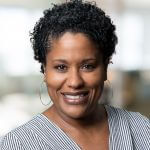
Gina Browne joined the Chancellor’s Office team in December of 2018 and has been working to support a variety of areas in our Student Services Unit. Prior to joining us she was a Manager at the California Student Aid Commission focused on foster youth and outreach, and previously was the Financial Aid Coordinator at Evergreen Valley College for 10 years. Dean Browne will be overseeing the areas of Financial Aid, Student Senate, Veteran’s Affairs, and Title IX/Campus Safety.
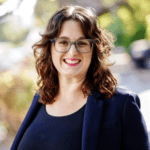
Allison Beer is a Dean of Educational Services and Support Division, which is committed to students getting the high-quality curriculum, support and instructional services that they deserve. The division is responsible for providing leadership, oversight and assistance for Financial Aid and Basic Needs.
What the System Teaches Us-a Dialogic Keynote on Learning Differences, Power, and Student Affairs Practice
Dr. Karen D. Harris (Tyrrell), M.A., ED.D., Executive Director/Chief Learning Officer @ Let’s Talk Learning Differences
In closing, this presentation will be delivered as a facilitated dialogic address featuring four distinct voices, each representing a different position within the California Community College ecosystem. Unlike a traditional panel, this session follows a choreographed narrative arc anchored by a lead scholar–facilitator and structured prompts. The format is intentionally designed to model the relational, systems-level thinking required for sustainable equity and access work in student affairs. California community colleges are charged with advancing equity for the state’s most diverse student population, yet access is often operationalized through compliance-based accommodations rather than systems-level design. This dialogic keynote reframes learning differences as a structural issue—produced by institutional assumptions about time, communication, documentation, and help-seeking—rather than an individual deficit located within students.
Anchored by a critical scholar-practitioner, this keynote brings together four voices: a student affairs executive, a frontline practitioner, and a neurodivergent community college alum or student. Each participant occupies a clearly defined role within the dialogue, illuminating how access is experienced, constrained, and negotiated across policy, practice, and lived experience within the California Community College Student Affairs Association context.
Through a structured conversation rather than open discussion, the keynote surfaces where institutional systems unintentionally reproduce barriers—particularly for neurodivergent, disabled, adult re-entry, first-generation, and racially marginalized students—and how student affairs professionals absorb these failures through invisible labor. The session concludes by reframing student affairs not as downstream problem-solvers, but as architects of neuroaffirming, equity-centered institutional design.
- Examine how learning differences are experienced differently across institutional roles (leadership, frontline practice, and student lived experience) within the California Community Colleges, and articulate why misalignment across these roles perpetuates inequitable outcomes.
- Interpret lived experience and practitioner narratives as forms of systems-level evidence, rather than anecdote, and connect those narratives to institutional policy, structure, and decision-making.
- Identify points of tension between equity commitments and institutional constraints (e.g., accountability metrics, compliance requirements, resource allocation) as they surface across leadership, practice, and student perspectives.
- Recognize the value of dialogic, cross-role engagement as a leadership practice, and describe how structured dialogue can be used to surface blind spots and inform more equitable student affairs decision-making.
Dr. Karen D. "KD" Harris Tyrrell (she/her) is a practitioner-scholar-activist whose life’s work is rooted in advancing social and educational justice for historically marginalized learners. Across every space she leads, her mission is clear: to build systems, communities, and pathways where all people — especially those at the intersections of neurodivergence, culture, language, and identity — are seen, valued, and empowered to thrive. Over a 16-year tenure as a higher education administrator at the University of Southern California, Dr. Harris Tyrrell championed equity-minded innovation that expanded opportunity and belonging for diverse student populations. She has also led transformative talent, organizational learning, and change management initiatives within two global corporations spanning media, information services, and entertainment sectors — bringing a systems-change lens to leadership across industries.
As Co-Founder and Executive Director of Let’s Talk Learning Differences (LD), she advances advocacy, education, and professional learning to improve life outcomes for neurodivergent people across the lifespan. She is also the Founder and Chief Engagement Officer of Neurodiverse*City — a liberatory third space created by and for neurodivergent people to connect, heal, build community cultural wealth, and lead collective systems change. A neuroaffirming qualitative researcher, Dr. Harris Tyrrell centers storytelling as a powerful tool for honoring lived experience and catalyzing transformation across education, employment, and civic life.
She holds dual B.A. degrees from the University of Southern California, an M.A. from Touro University Worldwide, and an Ed.D. in Educational Leadership from California State Polytechnic University, Pomona.